Photo: Pava, CC BY-SA 3.0 IT, via Wikimedia Commons
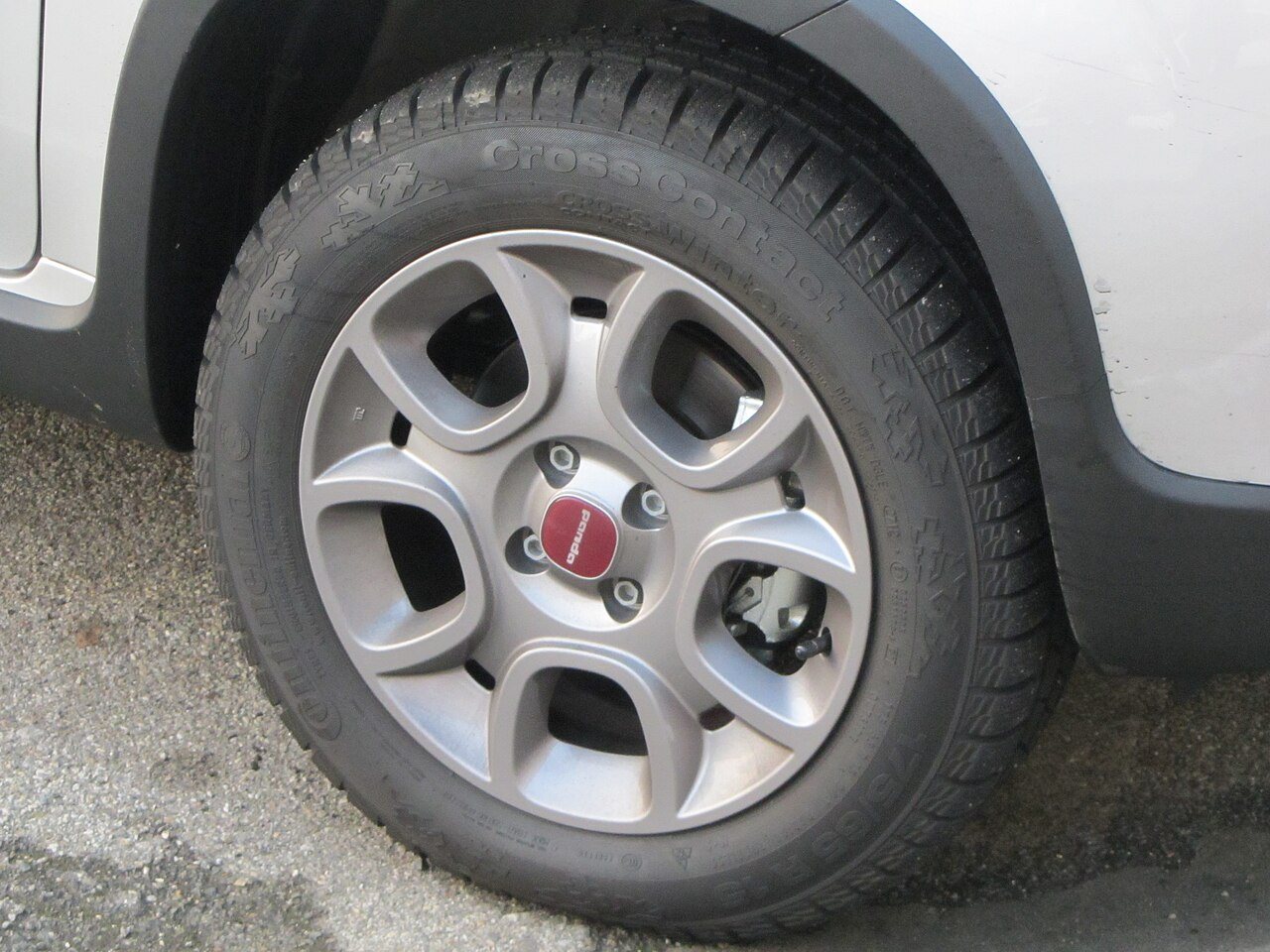
Somewhere on the sidewall of every tire there's a short run of letters and symbols that most of us never look at. In late October, with the first cold mornings arriving across much of the northern half of the map, two of those markings start to matter: a plain "M+S" and a small mountain with a snowflake inside it.
They look like they mean roughly the same thing. They don't, and the difference is the single most useful thing to know before you spend money on tires this winter.
The usual note first: this is general buying information. Where you live, how you drive and what your local rules say decide the right answer for you, and a good tire shop can look at your actual car.
M+S describes the tread shape
M+S stands for mud and snow. A tire gets that marking because of its tread design, broadly how much open space and how many grooves the tread pattern has. There is no requirement that the tire be tested on snow or ice to earn it.
That's why so many ordinary all-season tires carry M+S. It isn't false advertising exactly, since the tread does have the geometry, but it tells you very little about how the tire will stop on a cold, slushy road. I'd treat it as the tire equivalent of "family size" on a cereal box.
The mountain snowflake means it passed a test
The symbol people usually call the three-peak mountain snowflake (3PMSF) is different. A tire can only carry it if it has been tested for traction on medium-packed snow against a standard reference tire and beaten it by a set margin. The test is defined by ASTM, an American standards body, and the symbol is recognized in the United States, Canada and Europe.
The snowflake sets a minimum bar and nothing more. Two tires with the snowflake can still perform very differently, especially on ice, which the basic test doesn't cover. But if a tire lacks the symbol, nobody has shown it can handle snow, and in some places that matters legally as well as practically.
Rubber that stays soft in the cold
The other half of the story is the rubber itself. Ordinary tire compounds get harder as temperatures fall, and hard rubber grips poorly. Winter tires use compounds designed to stay flexible in the cold, plus tread with lots of small slits (called sipes) that give extra biting edges on snow and ice.
The temperature people often quote as the turning point is around 7°C, or about 45°F. Below that, a winter tire tends to grip better than an all-season even on a dry road. Above it, the softer winter rubber wears faster and handles less crisply, which is why they come off again in spring.
All-season, all-weather or full winter
This is the decision most buyers actually face, and the names don't help.
All-season tires are the default on most new cars. They're built for a mix of conditions in mild climates, usually carry only M+S, and are a compromise in real winter weather.
All-weather tires are a newer middle category. They're meant to be kept on all year but carry the mountain snowflake. For someone who sees occasional snow and doesn't want to swap tires twice a year, they're often the sensible pick.
Dedicated winter tires are the best option where winters are long, cold and snowy. Some have metal studs for ice, though studded tires are restricted or banned in many places and often only allowed for set months, so check before you buy.
Rules that may decide it for you
In some places this isn't a choice. Quebec requires winter tires on passenger vehicles for a set period each winter, and several European countries have winter tire rules that apply in wintry conditions or on certain dates. Some mountain highways in the American West have chain or traction rules that a snowflake-marked tire can help you meet.
The details change by region and sometimes by year, so I'd check your local transport authority's website rather than rely on what a neighbor remembers.
Smart ways to buy and keep them
If you decide winter tires make sense, a few habits make the money go further.
Buy a full set of four. Putting winter tires only on the front of a front-wheel-drive car can leave the rear end with far less grip than the front, which is a bad combination in a skid.
Check the age, not just the tread. The DOT code on the sidewall ends in four digits showing the week and year the tire was made. A tire that sat in a warehouse for years isn't necessarily bad, but it's worth knowing what you're paying for.
Think about a second set of wheels. Having winter tires mounted on their own cheap steel or alloy rims makes the twice-yearly swap quicker and usually cheaper, and it saves wear on the tires from repeated mounting.
Watch the tread depth. Winter tires lose a lot of their snow grip well before they reach the legal minimum, so don't assume a tire is fine all season just because it's legal. A tread depth gauge costs very little and takes the guessing out of it.
And store them properly when spring comes: clean, out of the sun, away from heat sources. A set that lasts four winters instead of three is one of the easiest savings in this whole category.
Enjoyed this story?Get a new one every day on social.