Photo: Donald Trung Quoc Don, CC BY-SA 4.0, via Wikimedia Commons
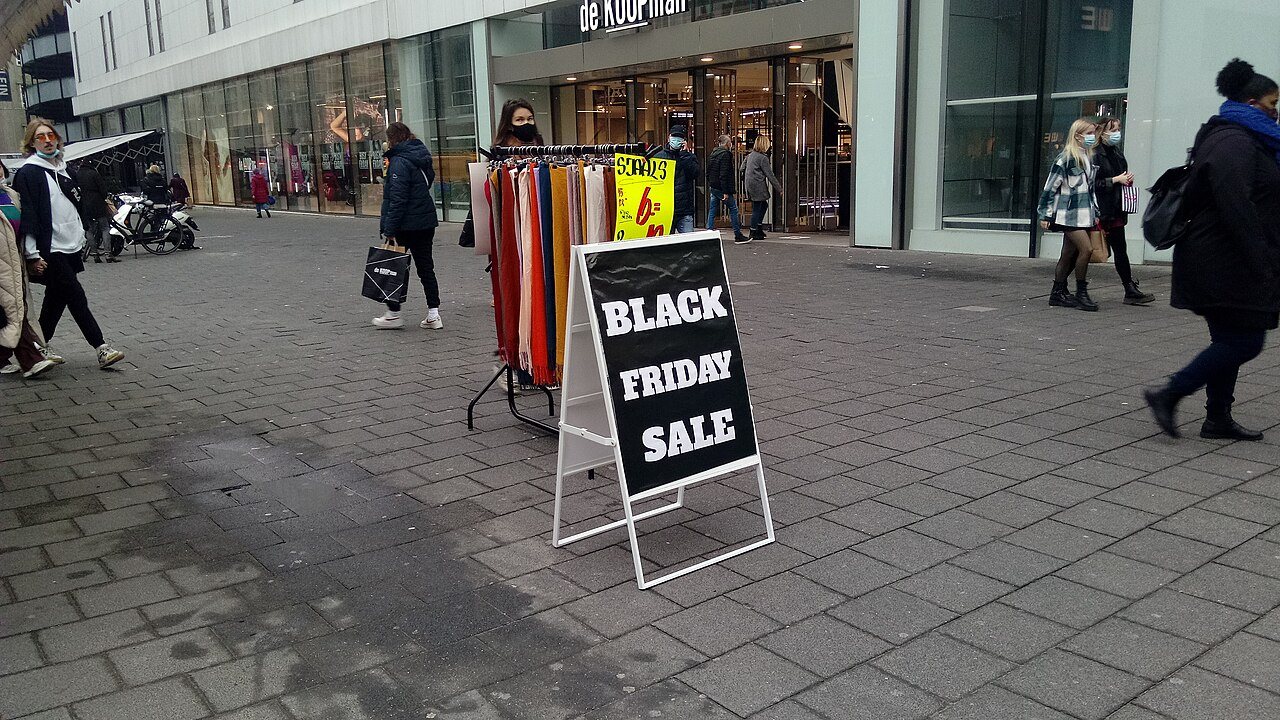
Black Friday falls on November 27 this year, and the emails have already started. So have the countdown clocks, which is a bit rich for a sale that some retailers seem to run for most of the month.
The British consumer group Which? gives the best evidence I know of on what these sales are worth. In a study published in 2023, it tracked 208 tech, home and personal care products sold as Black Friday deals at eight big retailers, following each price for six months either side of the sale. Only five of them were at their cheapest on the day. The other 98 percent were the same price or cheaper at some other point.
That's a UK study and a few years old, and I wouldn't claim American shelves behave identically. But it matches what price trackers tend to show, and the practical lesson holds up. Plenty of Black Friday prices are fine, some are not, and the way to tell them apart varies by what you're buying. What follows is general education, not advice about your own budget.
Start with the price history
Before you look at any percentage, look at what the thing has sold for. A big red "50% off" only means something if the higher number was real.
In the US, the Federal Trade Commission's guides on deceptive pricing say a former price should be one the item was openly and actively sold at for a reasonably substantial period. That's a guideline with a lot of give in it, and "list price" is an especially slippery phrase. You're better off checking for yourself. Free tools such as Keepa and CamelCamelCamel chart Amazon prices, Google's shopping results often show a price history, and PriceSpy and PriceRunner do the same job in Europe.
Do this now, while there's still time. Add what you want to a wishlist, note the price, and you'll know in three weeks whether the sale is a sale.
TVs: read the model number
Televisions are the classic Black Friday buy, and real bargains do turn up, especially on older stock making way for next year's sets. But this is also where you need to be most careful.
Manufacturers often make cheaper variants for big sales. These can look nearly identical to a well-reviewed set and share most of its name, with a slightly different model number and weaker parts inside. Reviews of the better set don't apply. Search the exact model number, and if nobody has reviewed it, take that as your answer.
Laptops, tablets and headphones
Laptops follow a similar pattern. The door-buster at the front of the ad usually has the minimum memory and storage, and that's the machine you'll be cursing in two years' time. Compare the full spec with a machine you'd buy anyway, and treat the sale price as a bonus.
Tablets, headphones and smart speakers tend to be a friendlier category, since the same models get discounted repeatedly through the year. That cuts both ways, though. If a popular pair of earbuds hits a certain price every few months, you can buy on Black Friday without regret, and you also don't need to panic if you miss it.
Kitchen gadgets and vacuums
Small appliances are often where I think the sale earns its keep. Air fryers, stand mixers, cordless vacuums and coffee machines all see real competition in November. Retailers use them as attention grabbers, and there's a lot of last year's stock to clear.
Two cautions apply. Check whether a bundle is padded with accessories you'd never buy on their own, because bundles make price comparison nearly impossible (I suspect that's the point). And look up replacement costs for filters, pods or batteries, since those are where a cheap machine can get its money back.
What to leave until later
Winter coats and boots are usually a poor Black Friday buy, because the steepest cuts tend to arrive after Christmas when stores need the rack space. The same goes for holiday decorations and wrapping paper, which reliably drop in late December.
Mattresses are another one to ignore. They seem to be on sale at every holiday on the calendar, so the deadline tells you nothing.
Phone deals deserve their own warning. A "free" phone from a carrier is often paid for through monthly bill credits over two or three years, and those credits can stop if you switch plans or leave early. Read how it works before you're tempted by the headline.
Before you click buy
The Which? study has one more useful detail. When the researchers widened the window to the two weeks around the sale, 86 percent of the products were still the same price or cheaper at another point. So there's rarely a real emergency, whatever the clock on the page says.
Check the return policy before paying, especially on sale items and on anything bought through a third-party seller on a big marketplace. Ask whether a retailer will match prices, since some will. And set yourself a list and a limit ahead of time, because a sale is designed to make you shop for the discount rather than the thing.
Black Friday got its name from Philadelphia police in the 1960s, who used it to describe the traffic and crowds after Thanksgiving. They didn't mean it kindly. It's still a decent frame of mind to shop in.
Enjoyed this story?Get a new one every day on social.