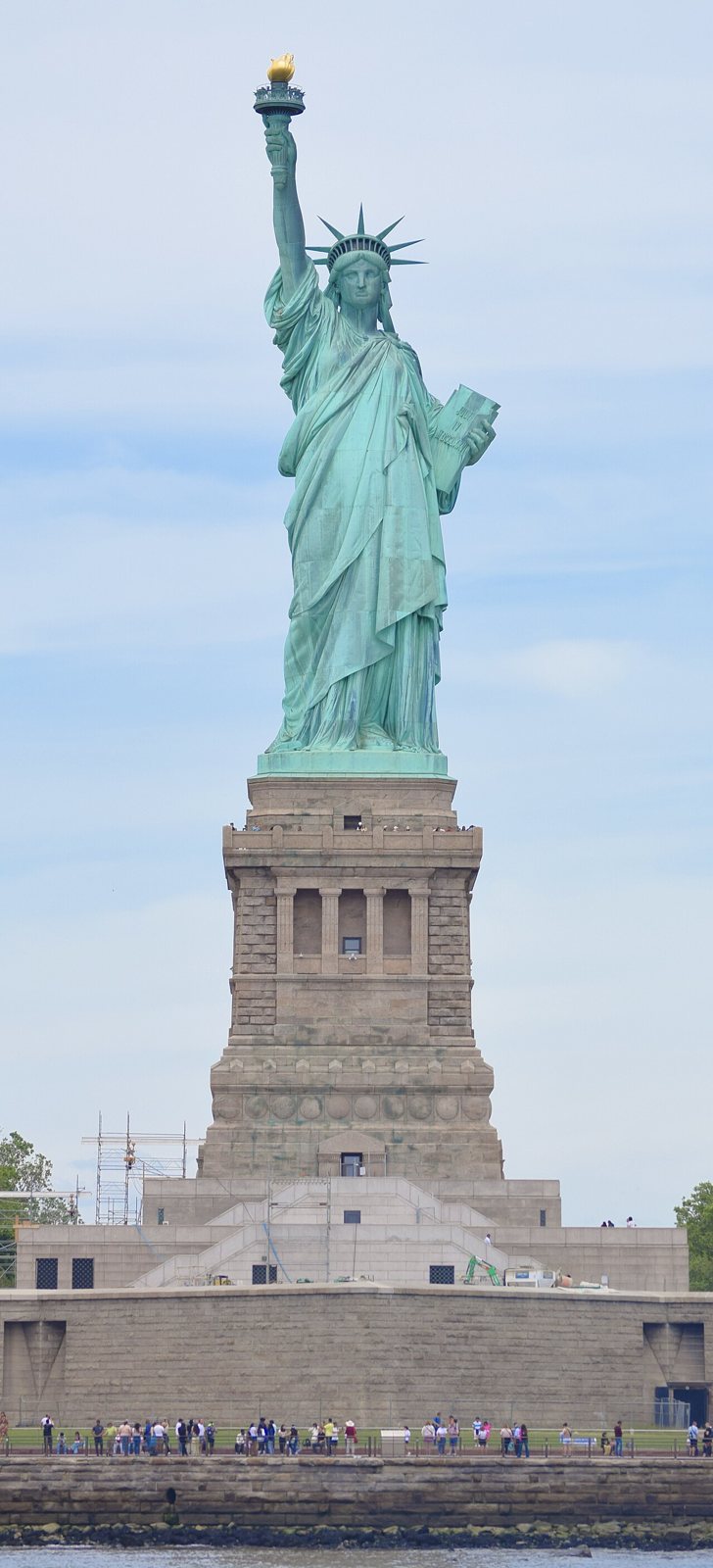
On October 28, 1886, President Grover Cleveland stood on Bedloe's Island in New York Harbor and accepted the Statue of Liberty from France. It was a wet, foggy day, and the crowds on the water could barely see the face they had come for. Back in Manhattan, office workers threw ticker tape out of windows along the parade route, which is how New York's ticker-tape parades began.
What most of the people cheering didn't think about was that, eighteen months earlier, the whole project had been stuck. The statue was finished and ready to ship. The pedestal it was supposed to stand on had run out of money.
The fix was one of the first big crowdfunding campaigns in American history, run by a newspaper. It's worth knowing about for its own sake, and it also says a lot about how small donations work, then and now.
France built the statue, America owed the base
The deal was simple on paper. The French would pay for the statue, designed by Frédéric Auguste Bartholdi, and the Americans would pay for the pedestal and foundation. The French side raised its money through public subscriptions, events and a lottery, and Bartholdi's copper figure was assembled in Paris by 1884.
The American side had a harder time. Its committee held fundraisers and art auctions, but money came in slowly. New York's legislature voted funds that Cleveland, then governor, vetoed, and Congress didn't come through either. By early 1885 work on the pedestal had stopped, and newspapers were openly wondering whether the statue would end up somewhere else. Boston and Philadelphia were mentioned as possible homes, which I suspect bothered New Yorkers more than any shortfall.
Joseph Pulitzer's offer to print every name
Joseph Pulitzer, the Hungarian-born publisher of the New York World, saw both a civic cause and a circulation opportunity. In March 1885 he launched an appeal in his paper. He scolded the city's rich for failing to pay up and asked ordinary readers to do it instead.
His hook was clever. The World promised to print the name of every donor, no matter how small the gift. A schoolchild's few cents got the same line in the paper as a businessman's check. The paper also printed many of the letters that came with the money, from children, workers and families, and those letters turned the fund into a daily story people followed.
How the money added up
It worked, and fast. In about five months the World's fund passed its target of $100,000, the amount the committee needed to finish the pedestal. The number of donors is usually put at more than 120,000, and the large majority gave less than a dollar each.
That is the part I find most interesting as a money story. Big donors had been asked and mostly hadn't delivered. Lots of tiny contributions, given publicly and with a bit of recognition attached, got the job done. Pulitzer's paper also did very well out of it, with readership growing during the campaign, so it was not pure charity on his side either. I don't think that cancels out what the readers did.
From crates to dedication day
The statue arrived in New York in June 1885, packed into more than 200 crates aboard the French ship Isère. Workers finished the granite pedestal, designed by architect Richard Morris Hunt, in the spring of 1886, and the statue was then put together on its iron frame, engineered by Gustave Eiffel's firm.
On dedication day Cleveland, now president, gave a short speech. The statue that had nearly been homeless became the first thing millions of immigrants saw on arrival in New York over the next decades.
What the pedestal drive still teaches about crowdfunding
Fundraising sites now make it easy to give a few dollars to a cause, and the same mechanics are at work: visible names, personal stories and regular updates. If you give or raise money this way, a few practical points are worth keeping in mind. This is general information, not tax or legal advice.
First, check who receives the money. In the United States, gifts to a registered charity can be tax deductible if you itemize, while money given to an individual through a personal fundraiser generally is not. Second, read the platform's fee and payout rules before you set up a campaign, because processing fees and optional "tips" come out of what you raise. Third, look for signs that a campaign is real: a named organizer, a clear link to the person or group it's for, and updates on how the money is used.
And if you're the one asking, take a page from Pulitzer. Thank people publicly where they're comfortable with it, tell them what their money did, and don't write off the small givers. The World's readers mostly sent coins, and the 151-foot statue went up on the pedestal they paid for.
Enjoyed this story?Get a new one every day on social.