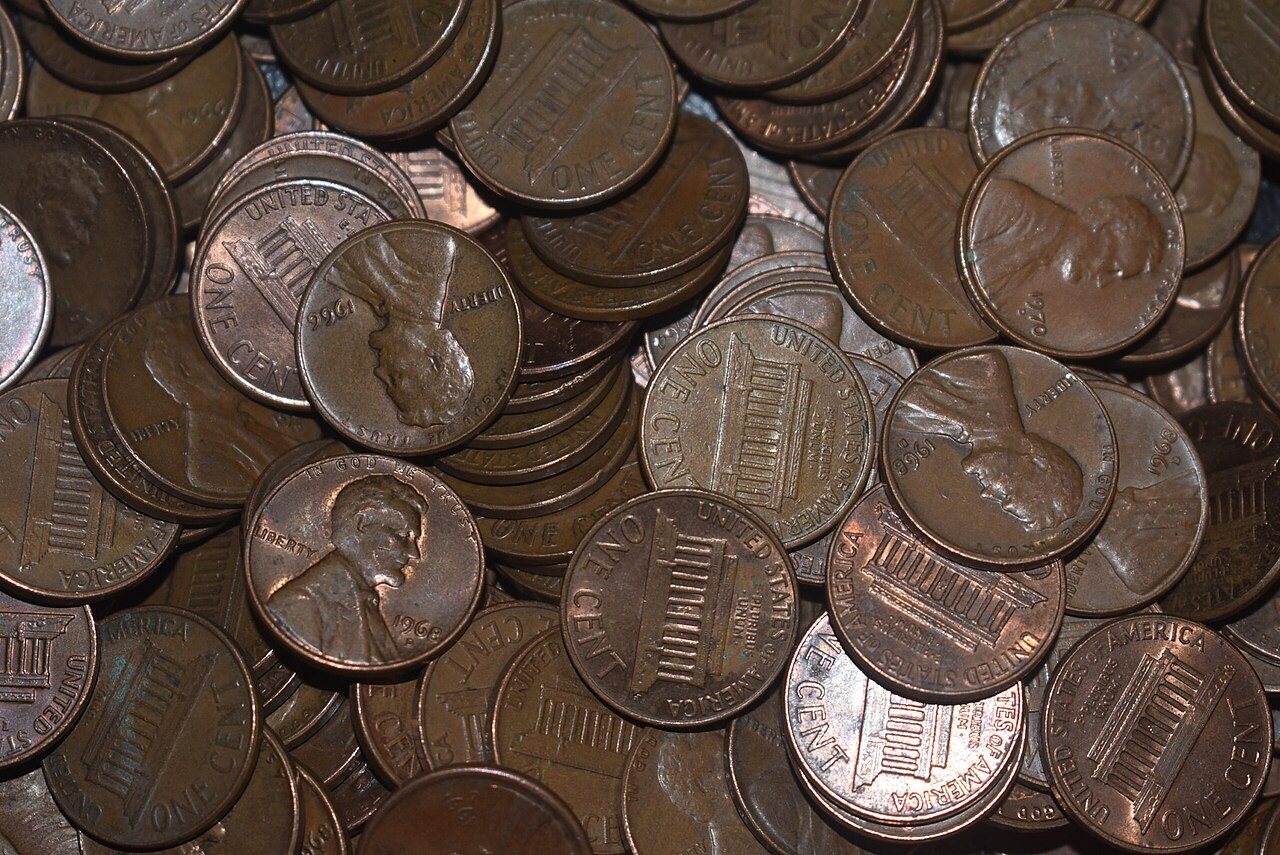
Pay for a coffee in cash this fall and there is a fair chance the cashier will round your total. A $3.47 bill becomes $3.45. A $3.48 bill becomes $3.50. Some stores post a small sign by the register about it, and some just do it.
The reason is that the United States has stopped making pennies for everyday use. The U.S. Mint struck its last circulating one-cent coins on November 12, 2025, and the pennies already out there are slowly drifting into jars, couch cushions and the backs of drawers. Stores that can't get enough of them have started rounding instead.
None of this changes very much money for any one person. It is still worth understanding, partly because the rules depend on where you live, and partly because there are easy ways to make sure the rounding never goes against you.
Why the penny stopped
The short version is cost. According to the Mint's own figures, each penny cost 3.69 cents to make in 2024, and the Mint produced more than 3.2 billion of them that year, losing about $85 million on the coin. Pennies made up well over half of all the coins it struck.
In February 2025 the administration said it had ordered the Treasury to stop producing new pennies. In May the Treasury announced that the Mint had stopped buying the blank metal discs pennies are stamped from, so production would end once the supply ran out. It ran out in November.
One thing that did not change: the penny is still legal tender. Only Congress can abolish a coin, and it hasn't. Every penny you own is still worth exactly one cent, and you can still spend it.
How cash rounding usually works
Most stores that round use the nickel rule. Totals ending in 1 or 2 cents round down to 0, totals ending in 3 or 4 round up to 5, totals ending in 6 or 7 round down to 5, and totals ending in 8 or 9 round up to the next 10. In practice the rounding generally applies to your final total, after tax, not to each item on the receipt.
The important part is that rounding only applies to cash. If you pay by card, phone or check, you are charged the exact amount, down to the cent. Rounding happens because there are no coins to hand back, and electronic payments don't have that problem.
The rules depend on your state
There is no federal rule on cash rounding yet. As of this summer, about 20 states had passed laws allowing businesses to round cash totals when they run short of pennies, and Arizona went further and made rounding the required method in that situation. Elsewhere, stores have mostly made their own policies, and a few cities require businesses to give exact change.
Congress has been working on a national fix. A bill called the Common Cents Act, introduced in 2025 with sponsors from both parties, passed the House in July 2026, and the Senate passed its own version in August. The two versions still had to be reconciled before anything could reach the president's desk, so check the latest before assuming a national rule applies to you.
Does rounding cost you money?
A little, maybe. In theory rounding is a wash: you lose two cents on some purchases and gain two cents on others. But economists at the Federal Reserve Bank of Richmond looked at real cash transaction data and found that totals were somewhat more likely to end in 3, 4, 8 or 9 cents, the digits that round up. Their estimate was that rounding to the nearest nickel would cost American consumers about $6 million a year in total.
Spread across the whole country, that is close to nothing per person. I'd file it under "worth knowing" rather than "worth worrying about." Still, if you pay cash for small purchases every day, there is no reason to hand over even a few extra cents a week when you don't have to.
Simple ways to keep rounding on your side
The easiest is to spend the pennies you already have. They're legal tender, and a cashier who is short on pennies will usually be glad to see them. Offering exact change also means no rounding happens at all.
If you have a serious jar of coins at home, many banks and credit unions will take rolled coins from customers, sometimes free. Coin counting kiosks are convenient but often charge a percentage unless you take the value as a gift card, so read the screen before you pour.
Check your receipts now and then, especially at places you visit often. Rounding should go both directions under the usual rule. If a store seems to round every cash total up, it's fair to ask what its policy is, and in states with rounding laws, the law usually spells out how it has to be done.
And if you'd rather not think about any of this, paying by card or phone sidesteps it completely, though that comes with its own trade-offs if you use cash to stick to a budget.
What to watch next
The bigger question is whether the nickel is next. It also costs more than five cents to make, and the same Richmond Fed researchers estimated that rounding to the nearest dime would cost consumers roughly nine times as much as nickel rounding. Nobody has announced anything on that front, but it's the debate to keep an eye on.
As always, this is general information rather than personal financial advice. For most of us, the end of the penny will mean a slightly lighter wallet and the occasional two cents saved or lost at the register, which is about as low as financial stakes get.
Enjoyed this story?Get a new one every day on social.