Photo: Associated Press, public domain, via Wikimedia Commons
On Thursday, November 23, 1939, millions of Americans sat down to Thanksgiving dinner. Millions of others treated it as an ordinary workday and waited until the following Thursday, November 30, to roast their turkey. Families who lived across a state line from each other could not agree on which day the holiday was.
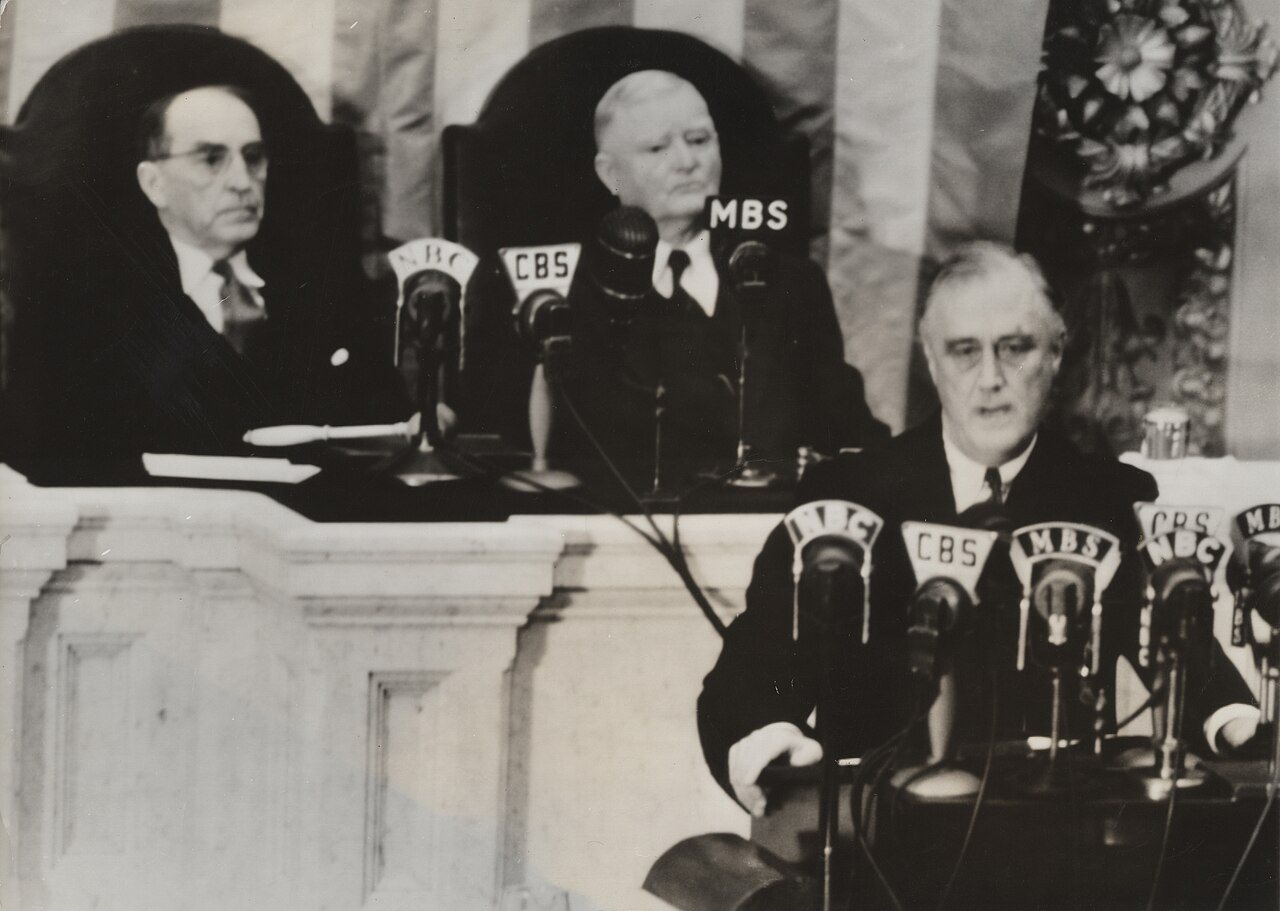
The cause was a decision President Franklin D. Roosevelt had announced that August, and the reason behind it was money. Specifically, it was about how many shopping days there would be before Christmas.
Critics gave the new date a nickname that stuck: Franksgiving.
Why the date mattered to stores
Since Abraham Lincoln's proclamation in 1863, presidents had set Thanksgiving on the last Thursday of November. Most years that worked fine. But November sometimes has five Thursdays, and 1939 was one of those years. The last Thursday fell on November 30, which left only 24 shopping days after the holiday before Christmas Eve.
That mattered because of an unwritten rule in American retail at the time. Stores generally did not start their Christmas advertising and decorating until after Thanksgiving, as starting earlier was considered bad form. A late Thanksgiving meant a short selling season, and in 1939 the country was still climbing out of the Depression.
Retailers lobbied the administration to move the date. The usual account credits Lew Hahn of the Retail Dry Goods Association with taking the case to Commerce Secretary Harry Hopkins. Roosevelt agreed, and in mid-August he said Thanksgiving would be celebrated on November 23, the second-to-last Thursday. That gave stores an extra week.
The country split down the middle
The trouble was that a presidential proclamation only fixed the holiday for federal employees and the District of Columbia. Each state decided its own public holidays, and governors did not all fall in line.
Roughly half the states followed Roosevelt and the rest kept the traditional date. A few, Texas among them, gave up trying to choose and recognized both Thursdays. Calendar printers, who had long since printed November 30, were stuck. So were college football teams, whose traditional Thanksgiving games had been scheduled years in advance.
The political reaction was loud. The mayor of Atlantic City is generally credited with the "Franksgiving" jibe, and Republican critics said the president had no business rearranging a national tradition for the sake of department stores. Plenty of ordinary people were simply annoyed that the holiday had become a scheduling problem.
Did it sell more presents?
This is the part I find most interesting, because it was a real experiment with a clear goal. Roosevelt kept the earlier date in 1940 and again in 1941, so there were three years of results to look at.
The results were underwhelming. The evidence available at the time did not show a clear jump in total holiday spending from the extra week. One plausible reading (and it is mine, not a finding from the period) is that families had a set amount to spend on Christmas, and a longer season just spread the same money over more days.
By 1941 Roosevelt conceded the change had not worked and said the holiday would return to the last Thursday in 1942.
How Congress settled it for good
Congress decided to take the question out of presidential hands. In late 1941 it passed a joint resolution fixing Thanksgiving as a legal holiday on a set Thursday each year. The House version said the last Thursday. The Senate changed it to the fourth Thursday, and that version won. Roosevelt signed it on December 26, 1941.
The choice of "fourth" rather than "last" was quietly a win for the retailers. In years with four Thursdays in November, nothing changes. In years with five, Thanksgiving now lands on the fourth one instead of the fifth, so it can never fall later than November 28. The shops got a smaller version of what they asked for, permanently.
What this means for your holiday budget
The calendar still shapes the season, even though stores now start Christmas promotions long before Thanksgiving. This year Thanksgiving is on November 26, which leaves 28 days from Black Friday to Christmas Day. In 2028, November has five Thursdays again, Thanksgiving falls on the 23rd, and the gap stretches to 31 days.
A longer season does not mean more money in anyone's account, and the 1939 experience suggests most families do not spend more just because they have more days to do it. What a short season does change is the pressure. Fewer days means the shipping cutoffs arrive sooner and more of the buying gets squeezed into the last week or so.
If you want to take one lesson from Franksgiving, set your holiday spending total before the sales start rather than letting the calendar set it for you. Then work out the last date you can order online without paying for express shipping, and treat that as your real deadline. (This is general information, not personal financial advice.)
Enjoyed this story?Get a new one every day on social.