Every autumn the same boxes appear by the shop doors: fan heaters, oil-filled radiators, sleek towers with blue LED displays, and at least one model promising to "slash your heating bill." Most of them will warm a room. Fewer of them are worth the money, and the claims on the packaging are not much help in telling them apart.
The decision is simpler than the shelf makes it look (thankfully), once you know the one thing the marketing tends to skip.
A quick note before we start: this is general buying information, not advice tailored to your home or your energy contract. Your own bill and your own room are what decide the right answer.
Every plug-in heater is about equally efficient
This is the part that trips people up. A plug-in electric heater turns essentially all of the electricity it uses into heat. That is true of a cheap fan heater and an expensive designer tower alike. So if two heaters both draw 1,500 watts, they produce the same amount of heat and cost the same per hour to run on full power.
That means "energy efficient" on a space heater box usually describes something else: a better thermostat, a timer, an eco mode that cycles the power, or a design that puts heat where you are sitting rather than up at the ceiling. Those features can save money. The heating element itself does not.
In the United States, most plug-in models top out at 1,500 watts, because that is about what a standard household circuit can comfortably supply. In the UK and much of Europe, where the voltage is higher, 2 and 3 kilowatt heaters are common.
The main types, and who each one suits
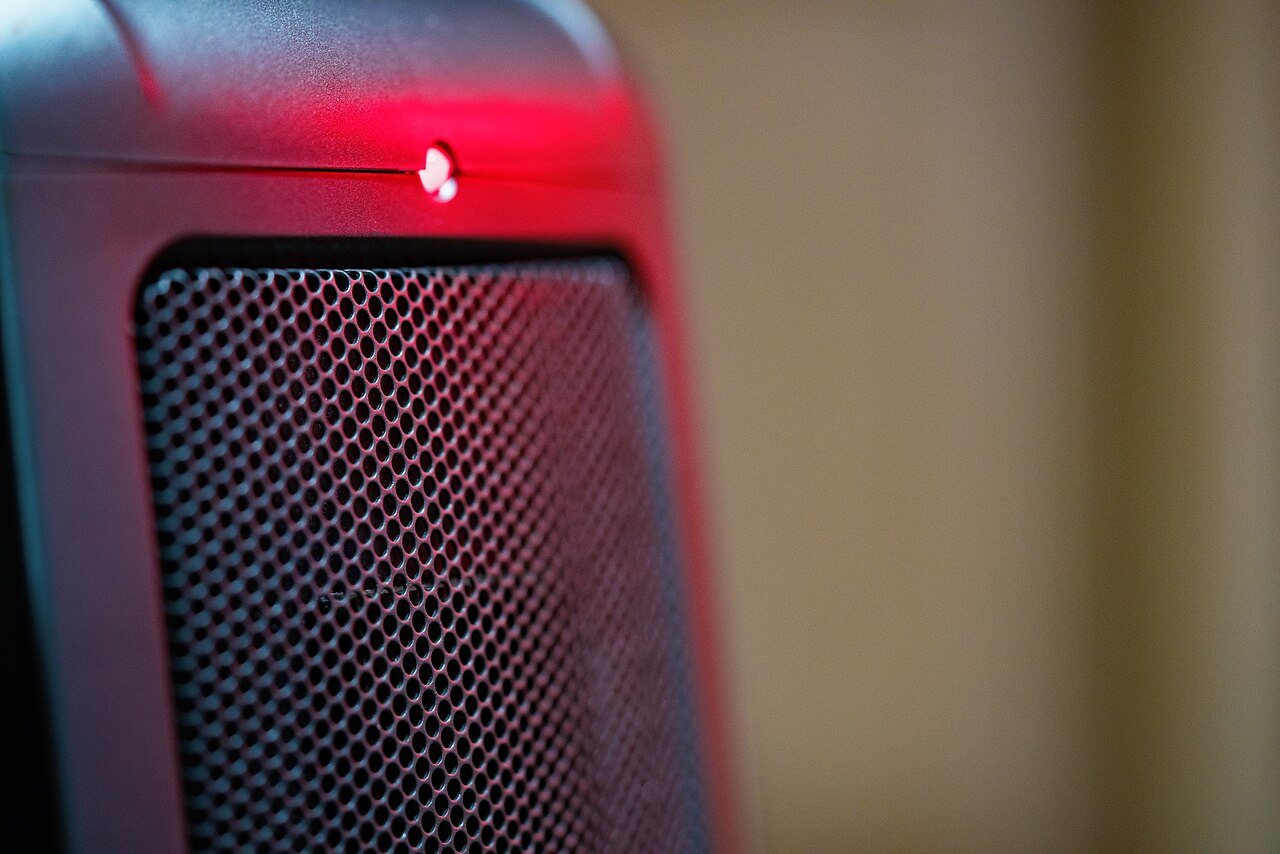
Close-up of the grille and power light on a ceramic space heater. Tony Webster, CC BY 2.0, via Wikimedia Commons
Fan and ceramic heaters blow air across a hot element. They warm a small room fast and are cheap to buy, but they are noisy and the heat fades quickly once they switch off. I'd use one for a bathroom first thing in the morning or a cold home office for an hour or two.
Oil-filled radiators heat a sealed reservoir of oil, which then radiates heat for a long time. They are slow to get going and heavy to move, but they are almost silent and give a steady, even warmth. For a bedroom, this is the type I'd look at first.
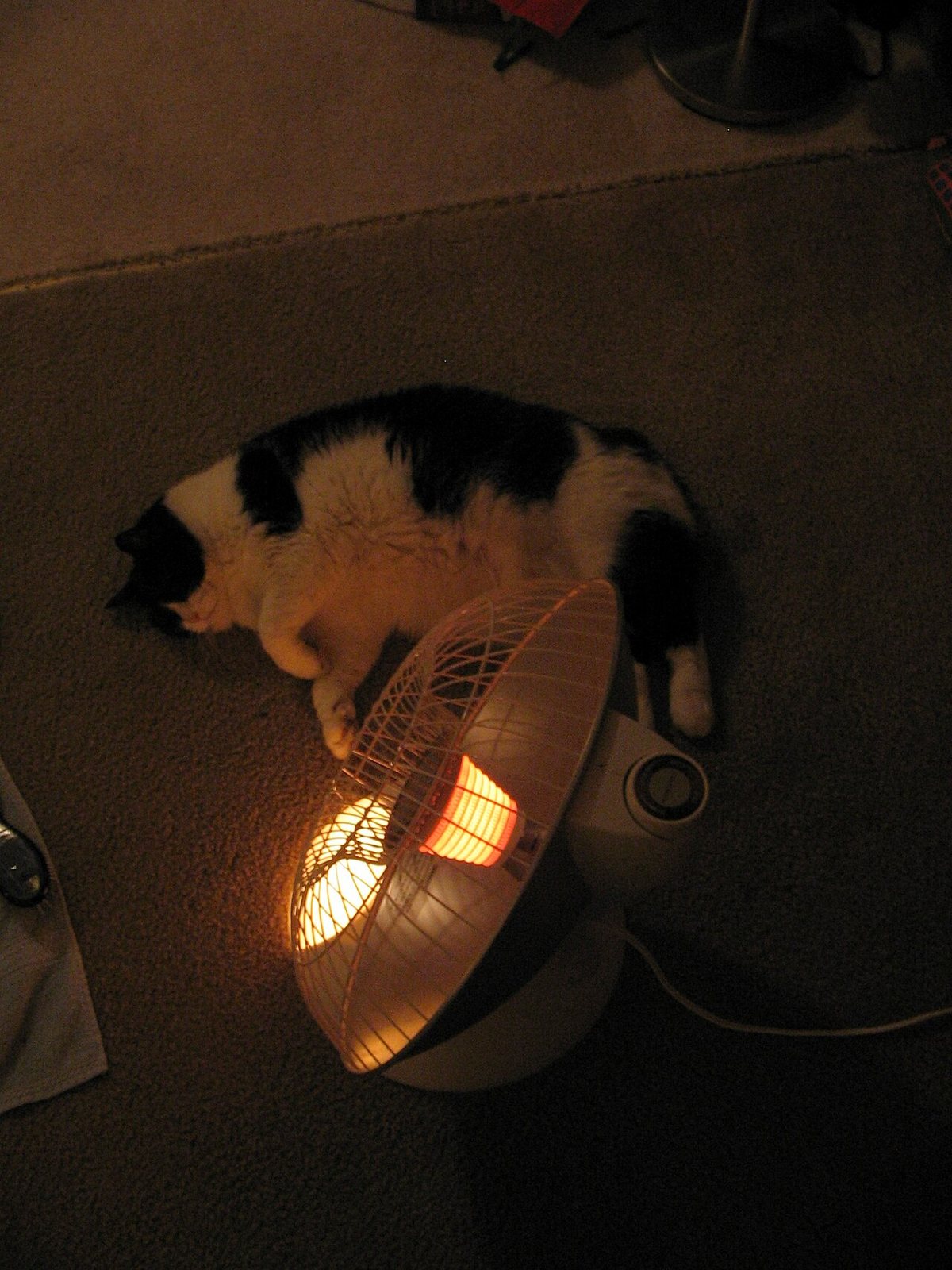
Infrared or radiant heaters warm people and objects directly rather than the air. That makes them handy in drafty spaces, a garage workbench or a desk by a cold window, where heated air would just escape. Stand outside the beam and you won't feel much, which is the trade-off.
Fuel-burning heaters that run on kerosene or propane are a separate category. They produce combustion gases, including carbon monoxide, and they need ventilation and a working carbon monoxide alarm. For most people heating a room indoors, an electric model is the simpler choice.
Safety features worth paying for
Space heaters are involved in a significant share of home heating fires, according to the US National Fire Protection Association, so this is the one area where I would not go for the cheapest box on the shelf.
Look for a tip-over switch, which cuts the power if the heater is knocked over, and overheat protection, which shuts it off if the internal temperature gets too high. Check for a certification mark from an independent testing lab. In North America that usually means UL, ETL or CSA, and in the UK and EU you should see the relevant safety markings on the product and the plug.
How you use it matters as much as what you buy. Fire safety agencies give the same advice year after year: keep the heater at least three feet (about a metre) from anything that can burn, plug it straight into a wall socket rather than an extension cord or power strip, and switch it off when you leave the room or go to sleep.
Working out what it costs to run
You don't need a calculator app for this. Take the heater's wattage, divide by 1,000 to get kilowatts, multiply by the hours you'll use it, then multiply by the price per kilowatt hour on your electricity bill.
A 1,500 watt heater on full power for four hours uses 6 kilowatt hours. Whatever your rate is, that's the number to multiply. A thermostat that switches the heater off once the room is warm will bring the real figure down, sometimes by a lot, which is why a proper thermostat with temperature settings is worth more than a simple low and high switch.
A common rule of thumb for sizing is around 10 watts of heater per square foot of floor (roughly 100 watts per square metre) for a room with ordinary insulation. A tall ceiling or a single-glazed window will push that up.
When a space heater actually saves money
A space heater saves money when it lets you heat one room instead of the whole house. If you work from a spare bedroom all day, turning the central heating down a few degrees and warming just that room can make sense.
It works less well if you have a heat pump. A heat pump moves heat rather than making it, and it typically delivers several units of heat for each unit of electricity, so a plug-in heater is a more expensive way to warm the same space. With a gas boiler or furnace the answer depends on your local gas and electricity prices, and it's worth doing the sum above before assuming either way.
Before you buy
Check the room size against the wattage, decide whether you need fast heat or steady heat, and make sure the safety features and certification marks are on the box. Then ignore most of the rest. The LED displays and remote controls are nice to have, but the heater with the better thermostat and the tip-over switch is the one I'd take home.
Enjoyed this story?Get a new one every day on social.